
Figurative Language Worksheets
What Is Figurative Language?
Figurative language uses words or expressions that go beyond their literal meaning to add creativity, imagery, and emphasis to writing. Authors use figurative language to engage readers, make descriptions more vivid, and convey emotions effectively.
Types of Figurative Language with Examples
- Simile – A comparison using “like” or “as” (e.g., “Her smile was as bright as the sun.”)
- Metaphor – A direct comparison without “like” or “as” (e.g., “Time is a thief.”)
- Personification – Giving human qualities to objects or animals (e.g., “The wind whispered through the trees.”)
- Hyperbole – Exaggeration for emphasis (e.g., “I’ve told you a million times!”)
- Onomatopoeia – Words that imitate sounds (e.g., “buzz,” “crash”).
Practice Figurative Language with Worksheets
Printable figurative language worksheets help students identify and use similes, metaphors, and other figures of speech. These activities improve reading comprehension, vocabulary, and creative writing skills.
Quick Link for All Figurative Language Worksheet Sections
Click the image to be taken to that Figurative Language Worksheet Section.
Frequently Asked Questions About Figurative Language
What are the 5 main types of figurative language?
The five main types are simile, metaphor, personification, hyperbole, and onomatopoeia.
Why is figurative language important?
It makes writing more expressive, helps readers visualize ideas, and improves creative writing skills.
Where can I download figurative language worksheets?
You can download free printable worksheets from our Figurative Language Worksheets section.
Why Learn Figurative Language?
Understanding figurative language is essential for improving both reading comprehension and writing skills. Students who can identify similes, metaphors, personification, and other figures of speech are better able to interpret an author’s meaning and appreciate creative writing techniques. Recognizing figurative expressions also expands vocabulary and helps students write with greater imagination and clarity.
Printable Figurative Language Worksheets
Our printable figurative language worksheets provide engaging practice for students in grades K-12. Activities include identifying similes and metaphors, creating original examples, and analyzing figurative expressions in short passages. These worksheets are perfect for classroom lessons, homework, or independent study.
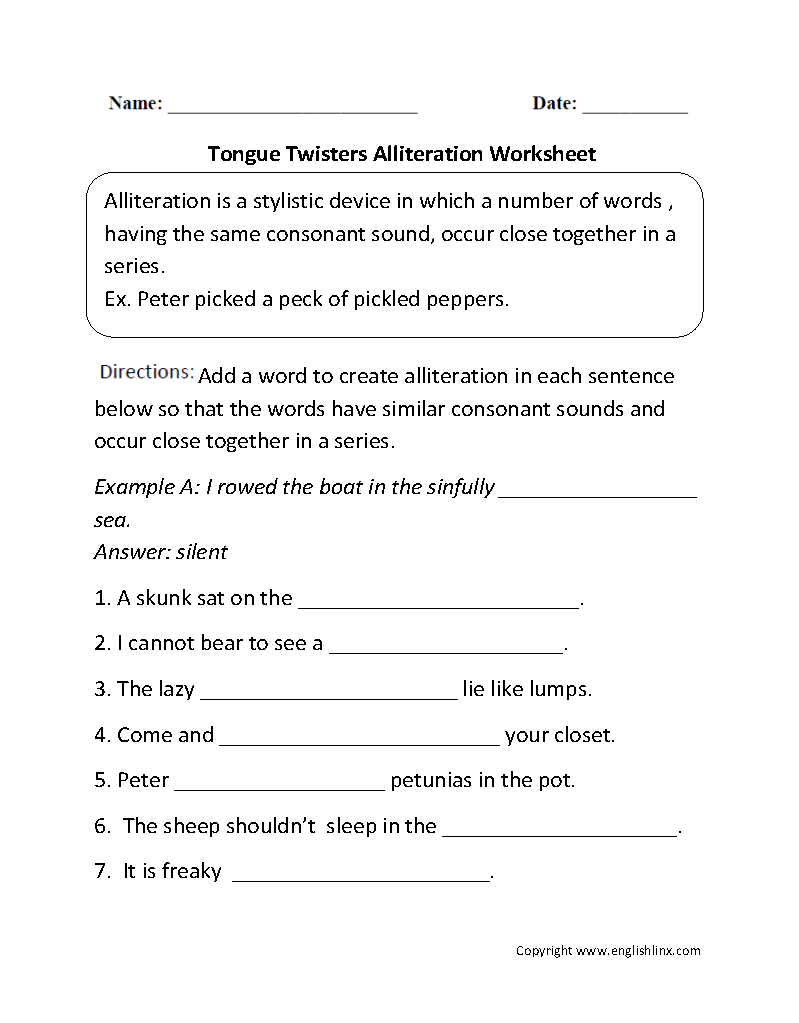
This is the alliteration worksheets section. Alliteration is the repetition of the same initial consonant sound in words that are in close proximity to each other. Alliteration is the conspicuous repetition of initial consonant sounds of nearby words in a phrase, and is often used as a literary device.
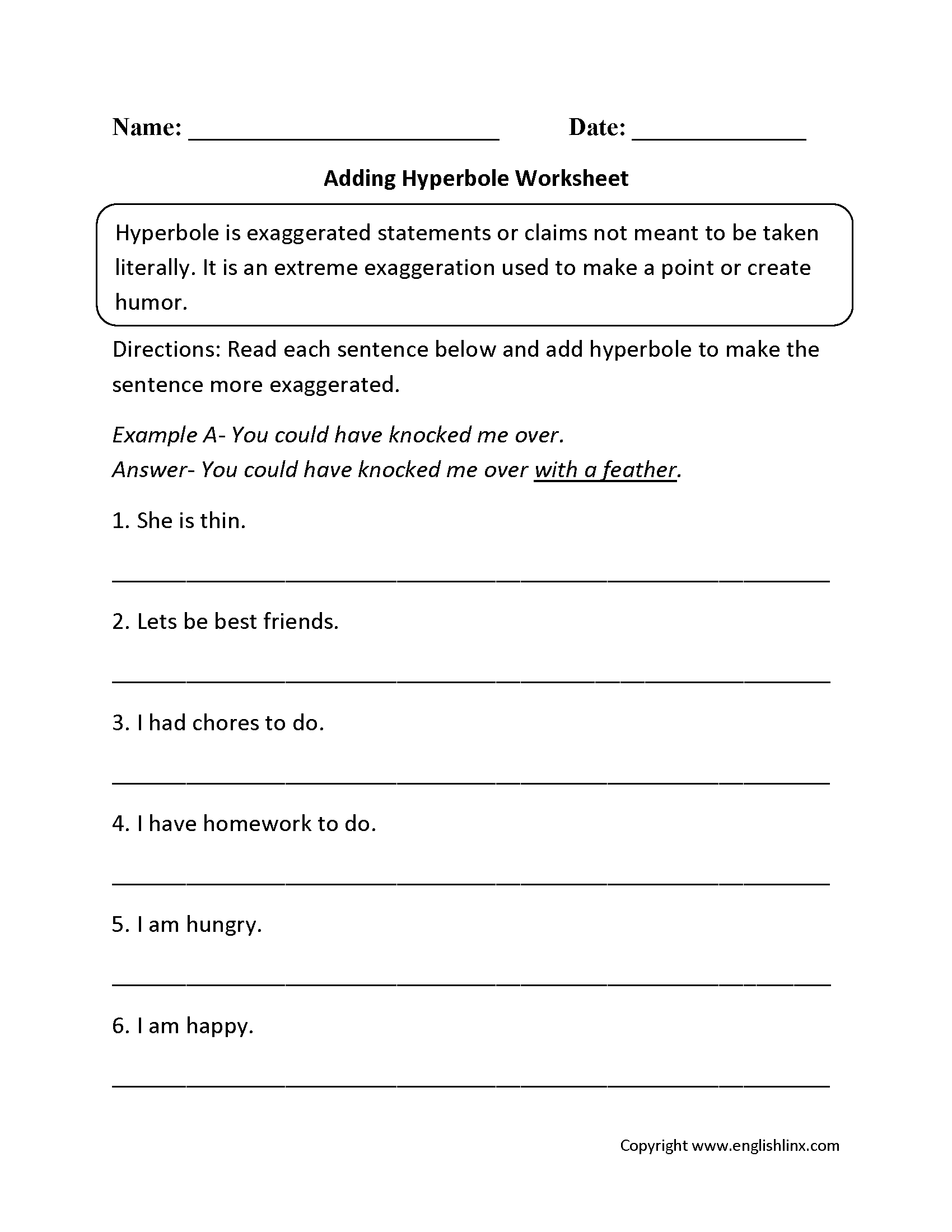
This is the hyperbole worksheets section. Hyperbole is exaggerated statements or claims that are not necessarily to be taken literally. For example, when someone says they can eat a horse right now, they do not literally mean they will eat a horse, but rather mean they are very hungry. Hyperbole is figurative language in the form of exaggeration.
This is the idiom worksheet section. An idiom is a phrase or expression that presents a figurative, non-literal meaning attached to a phrase. An idiom is a type of figurative language that relates and is used in a particular culture that is used to convey meaning beyond its literal meaning.
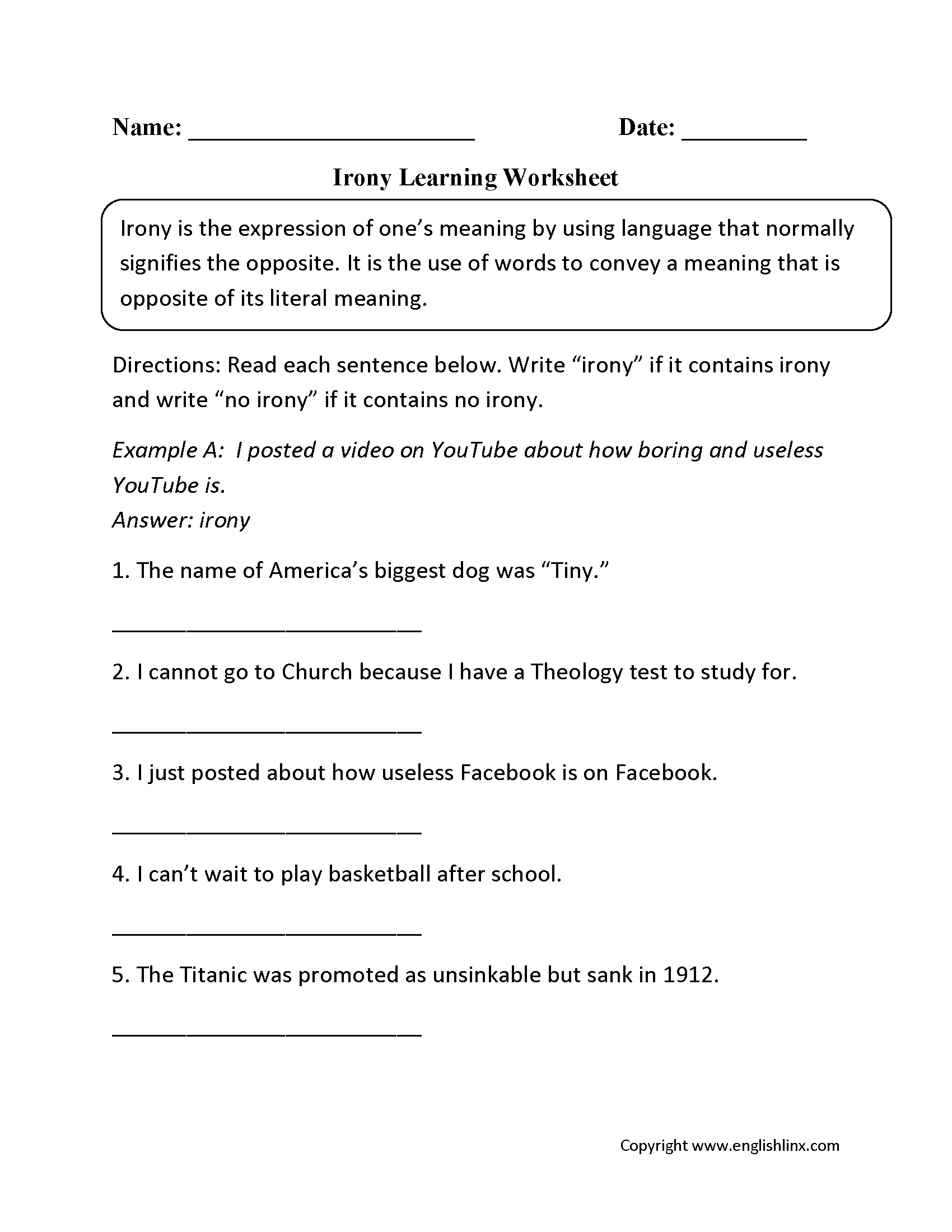
This is the irony worksheet section. Irony is a type of figurative language in which a phrase is expressed as oppositve of expectation. Irony is expression of a person's meaning by using language that signifies the opposite, typically for humourous effect of what is expected.
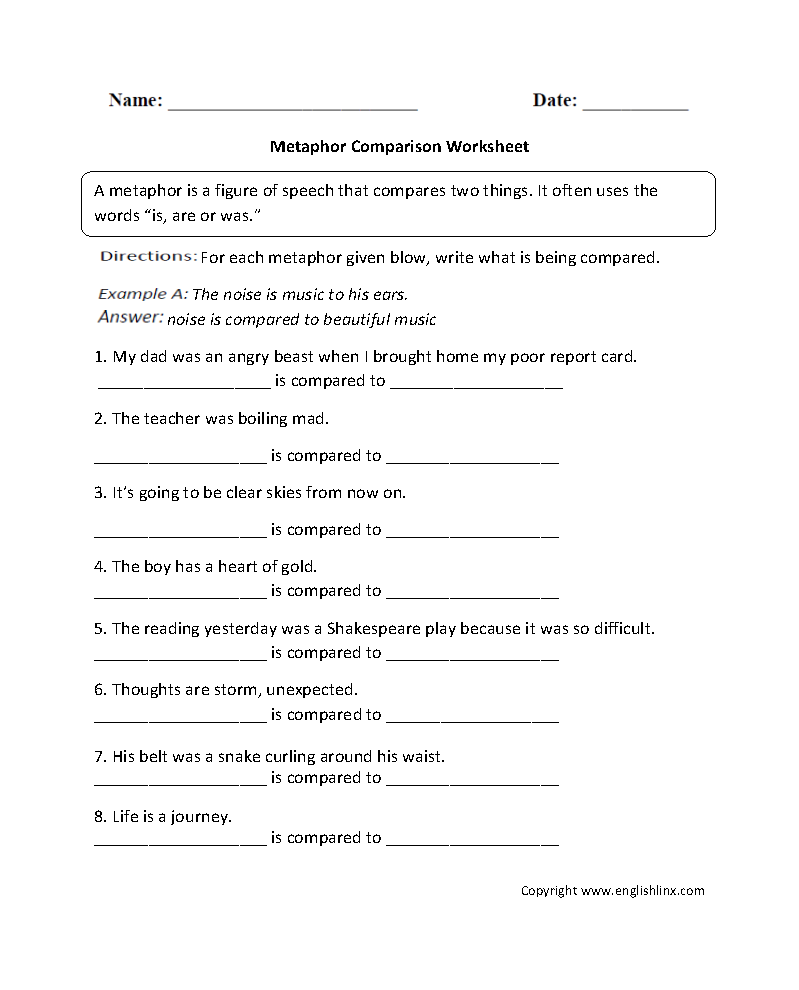
This is the metaphor worksheet section. Metaphors are a type of figure of speech that compares two unlike things. A metaphor has a rhetorical effect that directly refers to one thing by mentioning another. A metaphor pulls comparisons between two unrelated ideas.
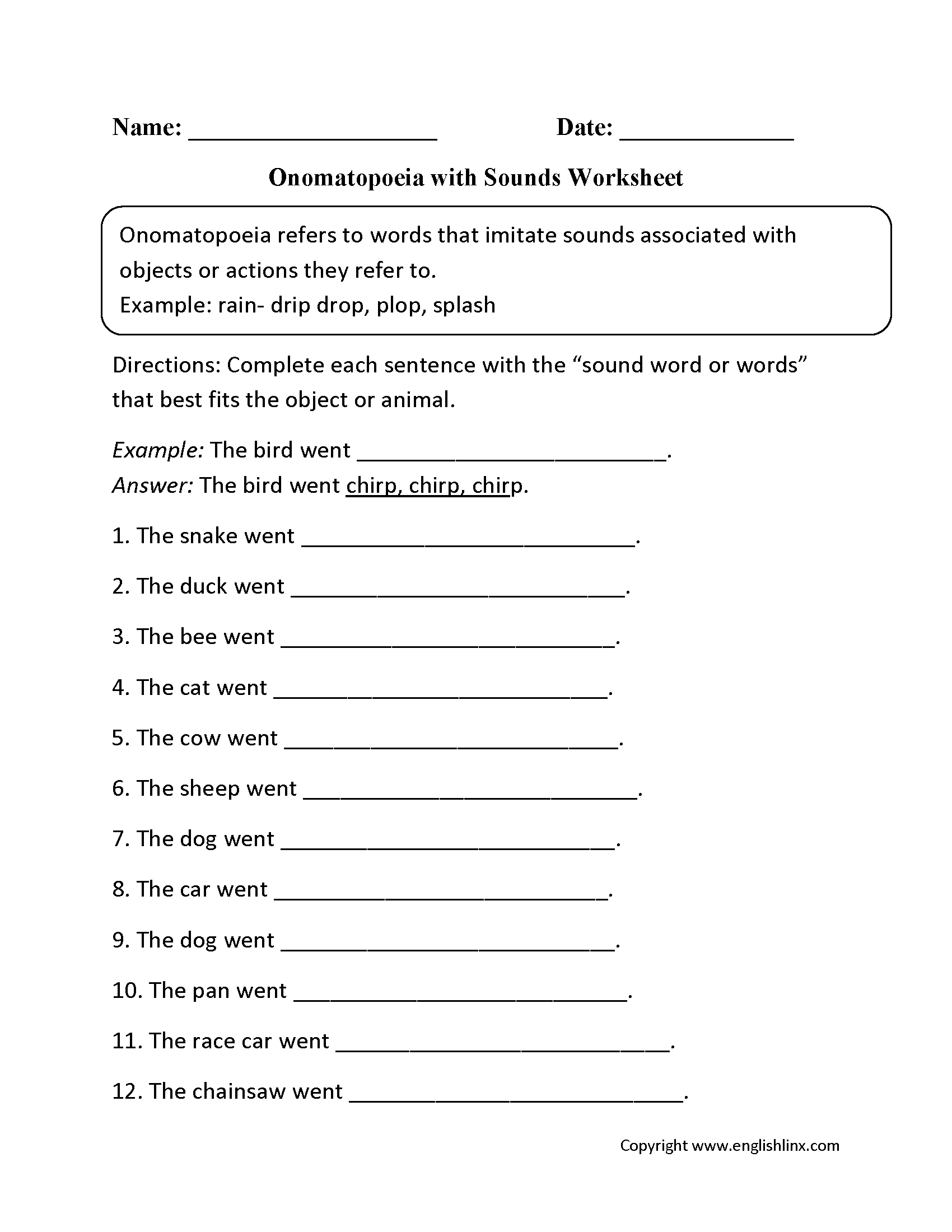
This is the onomatopoeia worksheets section. Onomatopoeia is the use or creation of a word that phonetically imitates, suggests, or resembles the sound it describes. Common onomatopoeia sounds include animal sounds such as birds, cats, dogs.
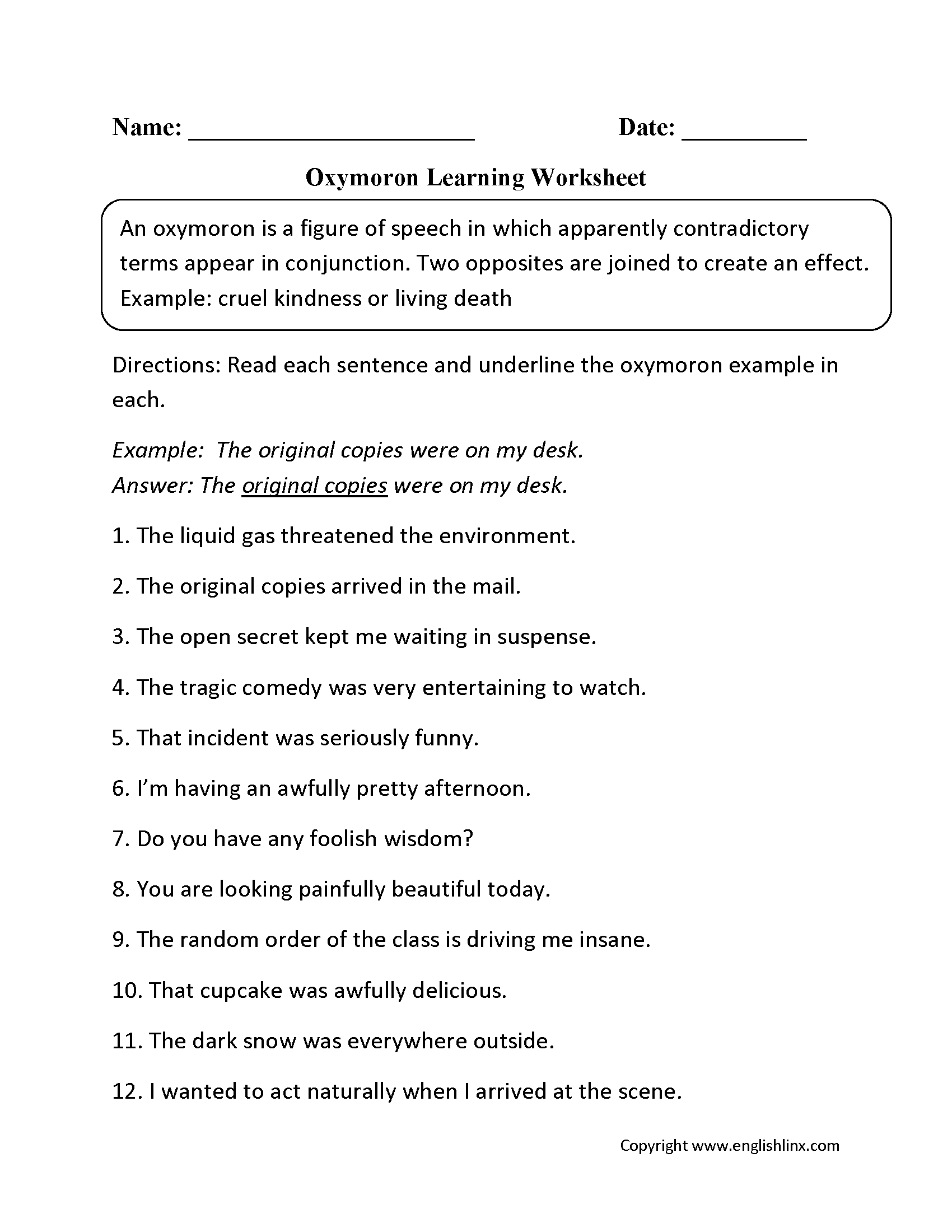
This is the oxymoron worksheets section. An oxymoron is a figure of speech in which apparently contradictory terms appear in conjunction. An oxymoron juxtaposes concepts with opposing meanings within a word or phrase that is a self-contradiction.
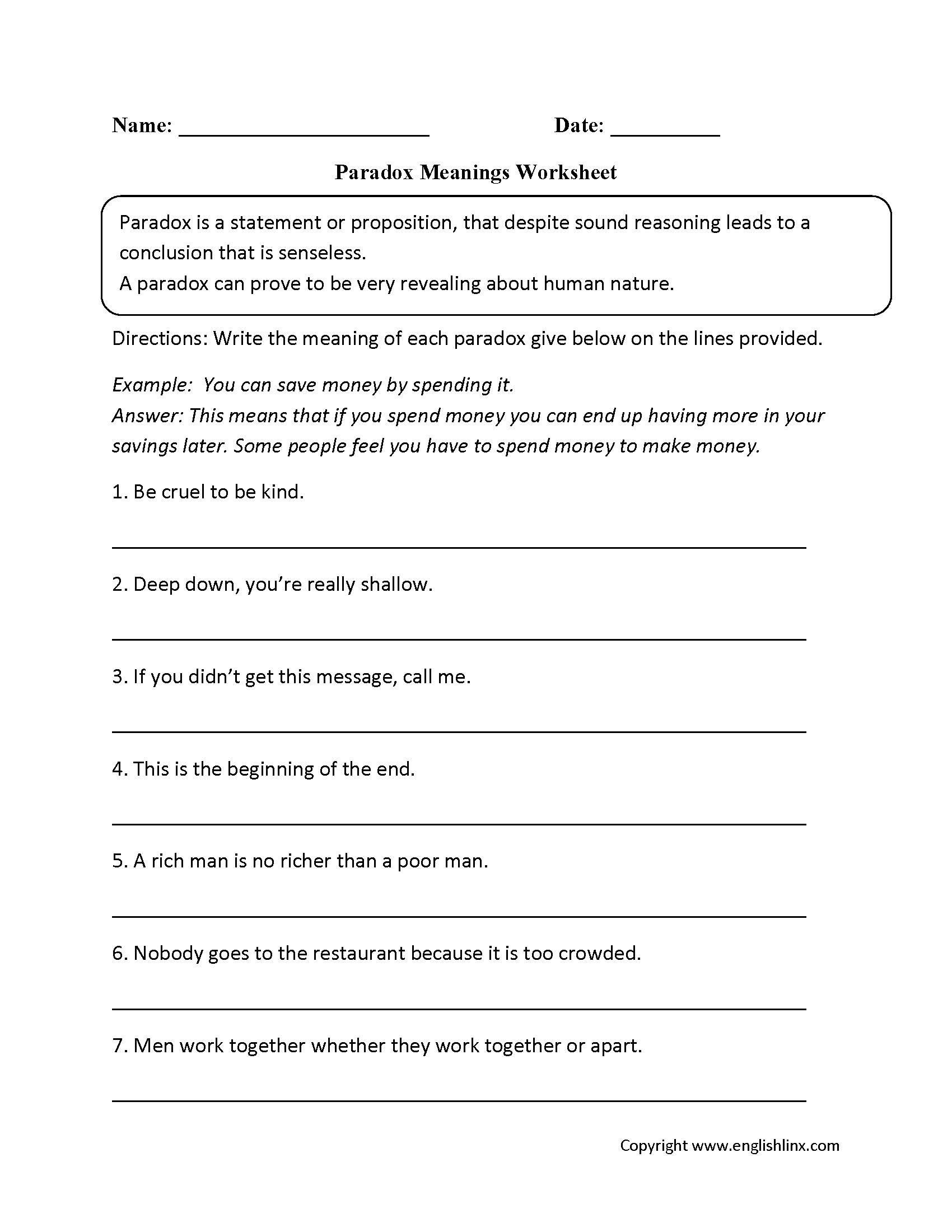
This is the paradox worksheets section. A paradox is a figure of speech in which a self contradictory statement or proposition when investigated or explained may prove to be well founded or true. The meaning of a paradox is when one such situation, action, or person has seemingly contradictory qualities or phases.
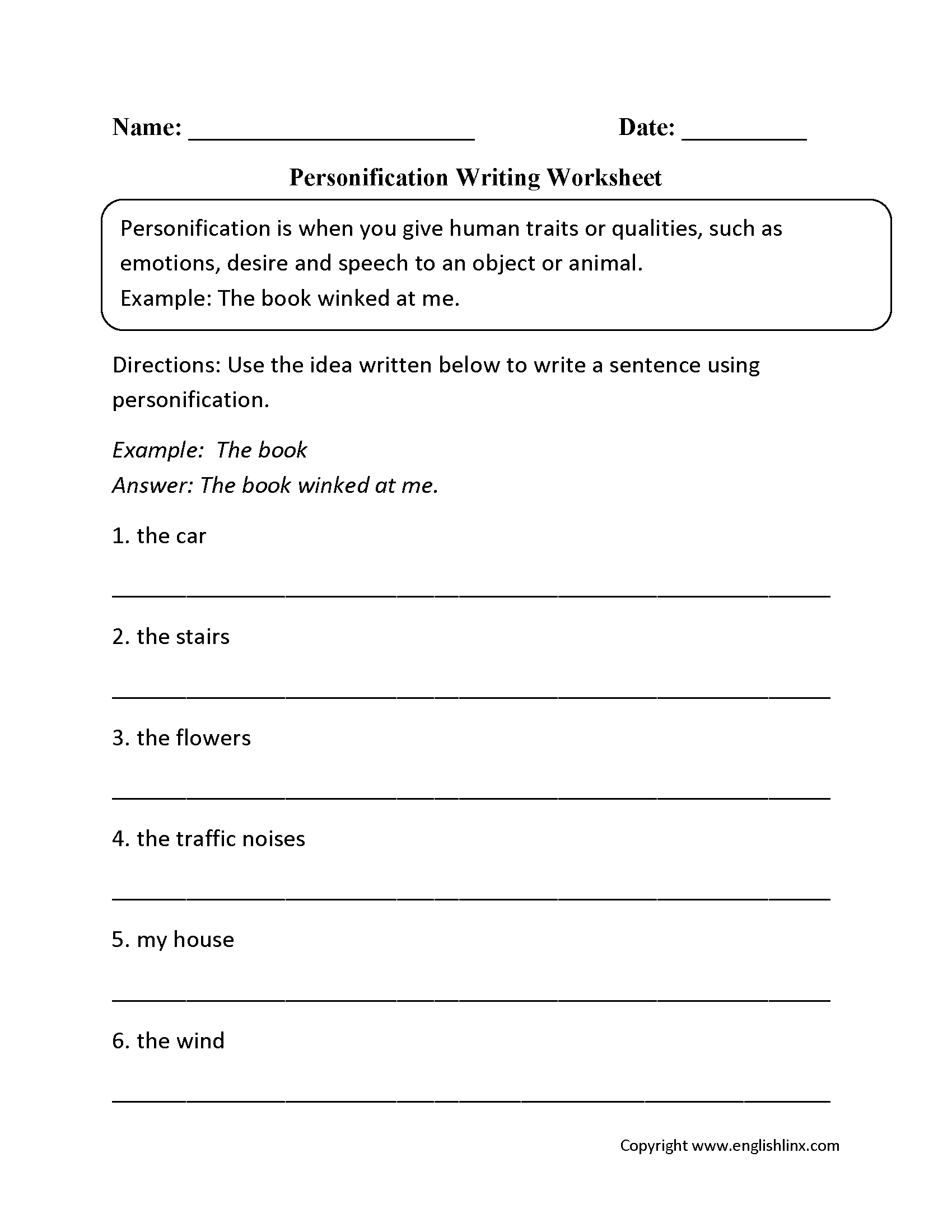
This is the personification worksheets section. Personification is the the use of human characterisitcs attributed to something non human.
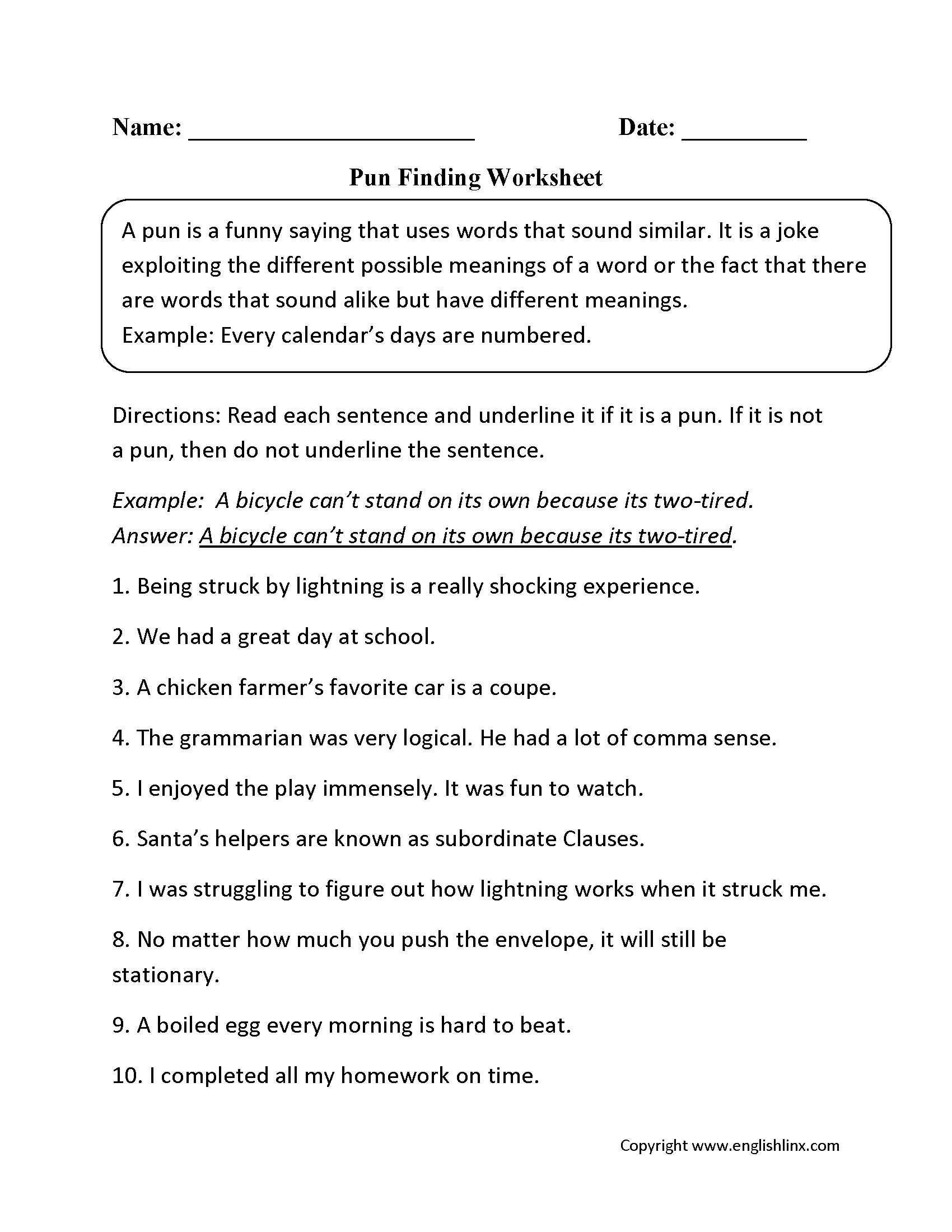
This is the pun worksheets section. A pun is a type of figurative language that is a humorous use of a word in such a way as to suggest two or more of its meanings or the meaning of another. A pun is a humurous use of words with multiple meanings or words that sound similar but have different meanings. It is a form of word play that exploits multiple meanings of a term, or of similar sounding words for intended humorous or rhetorical effect.
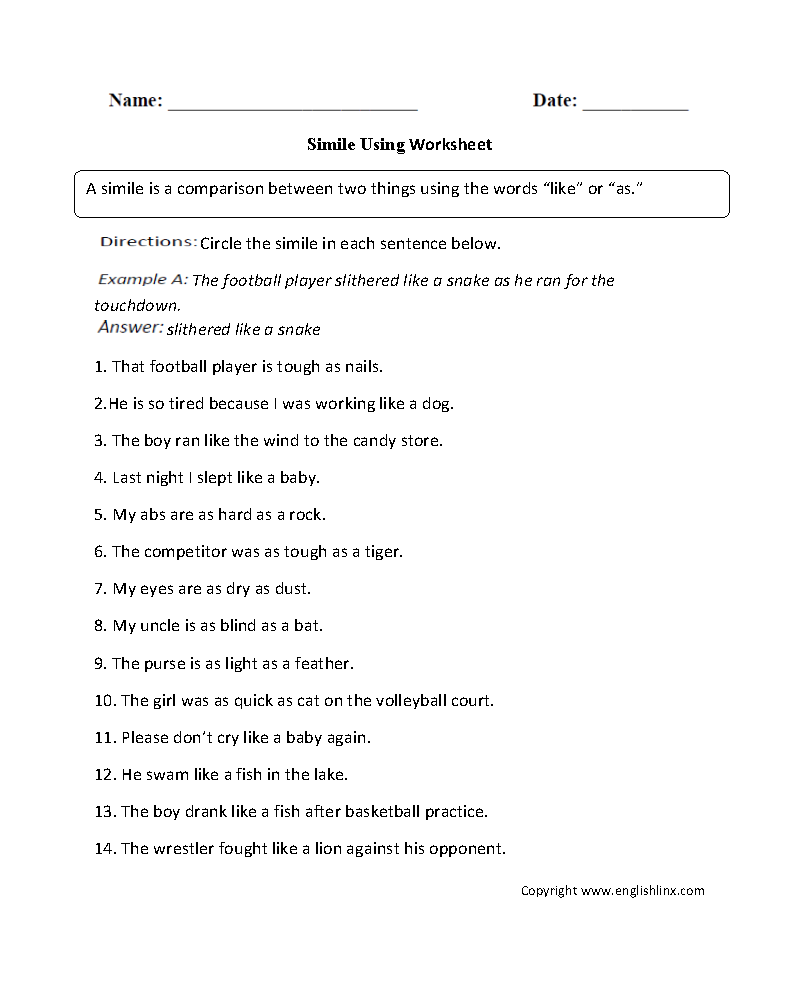
This is our simile worksheet section. A simile is a figure of speech comparing two things using the words "like" or "as." A simile compares two unlike or unrelated things. Often the comparison of a simile shows a common quality between them.